Showing posts with label 1914. Show all posts

Tuesday, May 4, 2021

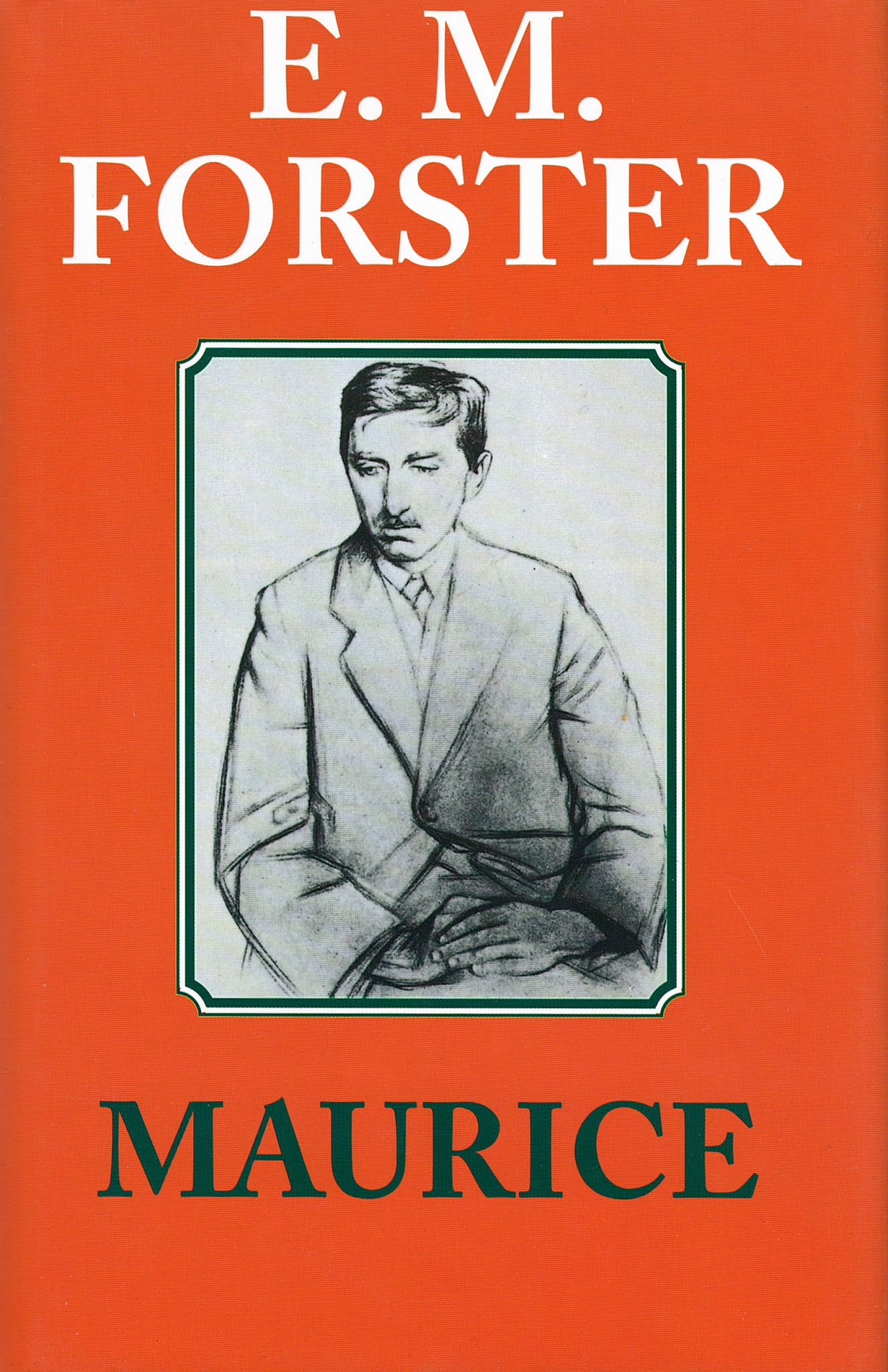
Maurice by E. M. Forster

Maurice by E. M. Forster ; New York : W. W. Norton, 1971
New York : W. W. Norton, 1971
Maurice, published posthumously in 1971, is at its heart a coming of age novel and a coming out novel. The novel opens with Maurice Hall at age 14-and-a-half and just finishing up his prep school studies. When one of his teachers explains relations between men and women, Maurice doesn't feel it has much relevance to his life and says that he thinks he shall never marry.

The novel quickly moves through the public school years which are defined by maintaining a facade  to show adherence to the expected behavior. Maurice is aware of this in himself, but because he is equally aware of it in his classmates, he doesn't connect it directly to his sexuality. 

While at Cambridge, Maurice befriends Clive Durham who talks to him about his shunning of religion and  educates him on the Greek classics, in particular those which defend or describe male relationships—Plato's Symposium for instance. What should be an obviously increasing closeness between the two is not at all obvious to Maurice who is surprised when Clive suddenly professes his love. 

If anything is known about the book's storyline, it is the relationship between Maurice and Alec Scudder, the game keeper at Penge, the Durham estate. The arc of the book, however is Maurice's journey toward being ready for that relationship.  The confusion about one's feelings, the searching for a cure to one's feelings, the desire to be normal, are all too familiar for many future gay lives as well as the later novels that describe them. 
 
The problems of class are on full display in Maurice. Early in the novel, it is quite clear that Maurice doesn't spare a thought for the lower class, and in some cases is actively unkind to those who inhabit it. It isn't simply that different characters are from different classes, it's how it is possible for them to live based on their position and that they have to always consider it when making choices in their lives. While Clive and Maurice are ostensibly from the same class, Clive's family is landed and have served in government, so have a very different role than Maurice's family which runs a financial firm. And, of course Alec, who works in service, has yet different possibilities for his life. Maurice and Alec's relationship, while already complicated by sexuality also has the added layer of class difference.
Maurice by E. M. Forster ; Abinger Edition : 5 ; London : André Deutsch, 1999
Abinger Edition : 5
London : André Deutsch, 1999
1999 saw the publication of the Abinger edition of Maurice, which like all Forster titles in the series, presents the work based on all manuscripts and notes available on a particular work. The 1971 edition of Maurice uses the 1959 manuscript as its core with minor changes to deal with issues of consistency and punctuation. The Abinger edition uses the manuscripts from 1914, two different versions of the 1932 manuscript and two versions of the 1959 manuscript to present a version of the novel that reads more smoothly. As well, notes are provided that discuss and show the additions and subtractions from the text through time. 

A key piece from the original 1914 manuscript that was dropped early by Forster is an epilogue that gives the reader a window into Maurice and Alec's life five years on. When Maurice's sister, Kitty, runs into him, he is working with Alec as a woodsman. The chapter, written primarily from Kitty's point of view, makes it clear that Maurice's choice has left himself and his family in disgrace and that he is no longer in contact with them. While he and Alec seem as committed to one another as ever, their life is not easy. After running into Kitty, they decide they must move on. It is interesting to see that Forster was realistic about what the future might hold for his characters, but by eliminating the epilogue he gave the reader a more uplifting ending with possibilities for Maurice and Alec.

One of the important things about reading classics of gay literature is a consideration of gay legacy and understanding the history of those that came before. Maurice is a beautiful example of acknowledging the long history of gay men and culture through the use of classics of Greek literature within the storyline, showing Clive and Maurice trying to understand themselves and their feelings by knowing their history. As well, the basis of the novel grew out of of the relationship that Forster saw between Edward Carpenter and his working-class partner George Merrill. It is the honoring of gay men who came before while passing the torch to the next generation. 


Bibliographies & Ratings II: Gunn (Britain 11b)

Wednesday, August 9, 2017

Desert Dreamers by Gerald Hamilton

Desert Dreamers by Gerald Hamilton Washington D.C. : Guild Press, 1966
Washington D.C. : Guild Press, 1966
Desert Dreamers was originally published in London with the imprint of At the Sign of the Tiger Lily in 1914. Appearing at that time as Desert Dreamers: a Novel of Friendship under the pseudonym Patrick Weston, it tells the story of Julian Thelluson who, against his mother's wishes, decides to holiday in Algiers instead of with her in Cannes.

Making the acquaintance of a Frenchman at the hotel in Algiers, he shares with him that he plans to continue on to Biskra. The Frenchman is alarmed and tries to talk him out of it by stating that Biskra isn't the place for an Englishman like himself.

Julian's mind, however, is made up. Upon his arrival in Biskra he runs into a friend of his mother's, a barrister named Joseph Hoxton. When he is introduced to Hoxton's guide, Tayeb ben Mahmud, a young Algerian, he is instantly drawn to him.

Hamilton refers to Julian having read The Garden of Allah as the source of his desire to travel to Biskra. The Garden of Allah is a 1905 novel by Robert Smythe Hichens (author of the 1894 novel about Oscar Wilde, The Green Carnation) about an English woman of 32 years who has yet to find love. Her parents are deceased so she travels to Algeria with her maid and finds love in the desert.

Another reference, and likely the one that the Frenchman in the novel is reacting to, is the connection of Biskra with Oscar Wilde, Lord Alfred 'Bosie' Douglas, and Andre Gide. Gide has written about Wilde and Douglas traveling to Biskra and as part of their vacationing, picking up young local men. When Gide visited them, they introduced him to the lifestyle and the many young men who were available to European tourists.

Desert Dreamers would have been very bold for its time, thus the need for a pseudonym. Prior to each chapter, there is a short poem or poem fragment relating to the action of the text. They are not at all subtle. They include everything from Shakespeare to The Koran. One of my favorites is this one by Lord Alfred Douglas.

Jacinth blue and violet
  Is the radiant light that flashes
Through the tangled silken net
  When he lifts his languid lashes.

It is said that Gerald Hamilton is the source of Isherwood's Mr. Norris. In 1966, Guild Press re-released the complete text of Desert Dreamers under the author's actual name with a forward by Christopher Isherwood where he discusses this.

Bibliographies & Ratings: Young (At the Sign of the Tiger Lily edition, 4070* ; Guild Press edition, 1675*)