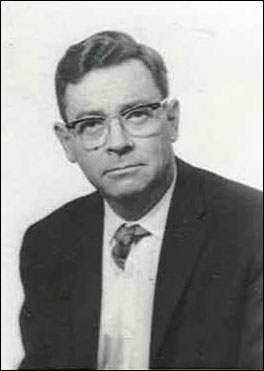
Showing posts with label Fritz Peters. Show all posts

Friday, June 23, 2023

Why Such a Strong Reaction? : Mary Jane Ward's Review of Fritz Peters' The World Next Door

TOP ROW: The World Next Door, New York : Farrar, Straus, 1949 with author, Fritz Peters. BOTTOM ROW: Author, Mary Jane Ward and her novel, The Snake Pit, New York : Random House, 1946.
TOP ROW: The World Next Door, New York : Farrar, Straus, 1949
with author, Fritz Peters. BOTTOM ROW: Author, Mary Jane Ward
and her novel, The Snake Pit, New York : Random House, 1946.
The World Next Door, Fritz Peters' freshman novel, was released on September 15, 1949 and was well received by the majority of reviewers. While some, particularly those from more conservative outlets, took issue with the gay aspect of the story, the consensus was that Fritz Peters had begun what could prove to be an extraordinary literary career.  In fact, the book's dustjacket highlighted advance praise from Jean Stafford, Eudora Welty and others.1 When some of the country's top editors and columnists were asked in late 1949 about the best writers to have emerged in the post-war period, Fritz Peters was mentioned alongside other notables such as Norman Mailer, Carson McCullers, Tennessee Williams, Truman Capote, and John Horne Burns, to name a few.2

Reviews of The World Next Door often referenced and compared it to Mary Jane Ward's landmark The Snake Pit from 1946 due to its focus on the patient experience within a psychiatric hospital. While some reviewers suggested that it held its own against the standard-bearer of psychiatric novels, others thought that it was in fact superior. When The New York Times Book Review published its review of The World Next Door penned by Ms. Ward it became the talk of the literary world.3, 4 It was much discussed because it was so out of step with the consensus view of the work. In order to understand the source of this scathing review, one must first try to understand Mary Jane Ward's experience publishing her own novel based on her stay in a psychiatric hospital.

Excerpt from Nightmare Revisited, Mary Jane Ward's review of Fritz Peters' The World Next Door.  New York Times, Sept. 18, 1949, p.BR6
Excerpt from Nightmare Revisited, Mary Jane Ward's
review of Fritz Peters' The World Next Door.4
The Snake Pit
, based on the author's own experience in psychiatric care, was quite successful after it was published, becoming a Book of the Month Club selection, and by 1948 being made into a successful film starring Olivia de Havilland. But it didn't find its way to being published easily. Ms. Ward struggled to publish for some time before the Snake Pit was picked up. Once published, her work was praised by Karl Menninger of The Menninger Clinic and she embarked on speaking tours—engaging psychiatric professionals with the aim of improving equity of conditions and treatment for patients of all races and classes. Ward had a platform and was affecting significant change. 

For all of the issues that Ward hoped to change in psychiatric care, she saw those doctors and staff providing treatment as generally good people trying to do good work. Peters' novel provides insight into the male experience, and the experience at a military hospital in the post World War II years in particular—a very different situation than the one Ward described.

Unlike, Ms. Ward, Fritz Peters appeared to become an overnight success—blurbed by major authors and also drawing attention to the shortcomings of psychiatric care at that time. The World Next Door, based on Peters' own experience, sees its protagonist, David Mitchell admit during the course of his treatment that he had a previous homosexual experience. Because patient records were available to staff of all levels on the ward, it became common knowledge. This knowledge was used against him by ward staff, culminating in a sexual assault. But because the word of a psychiatric patient can't be trusted, his accusation wasn't believed by the doctors.

Did Mary Jane Ward simply not find plausible the idea of staff behaving in this way? Or did Ward find Peters' characterization of hospital staff as not only unfeeling but as potentially sexually predatory a threat to all of the work that she had done in recent years to improve the patient experience? Was this simply a case of sour grapes for Peters' writing in a genre that she had dominated? Or was it more about the relative ease with which the literary establishment welcomed Peters' work after Ward had struggled for years to get published?  Was his relative ease of being published down to sexism? One thing is for sure, Peters certainly struck a nerve.

Note
This post is meant to highlight an anomalous review of Fritz Peters' The World Next Door, while giving the reader a sense of how the book was generally received and what Peters' literary future was perceived to hold. Mary Jane Ward's The Snake Pit is an extraordinary work and remains a favorite of early Cold War era psychiatric novels. Both authors and their novels, which offer different perspectives on a common theme, are well worth a read.

1  Bixbi, G. (1980, Win.). Blurbs: Welty on Fritz Peters. Eudora Welty Newsletter, 4(1), p.2-6
2  Babcock, F. (1950, Jan. 1). Among the Authors. Chicago Daily Tribune, p.F6.
3  Kilgallen, D. (1949, Nov. 3). Voice of Broadway. Olean Times-Herald (Olean, NY), p.18.
4  Ward, M. J. (1949, Sept. 18). Nightmare Revisited. New York Times Book Review, p.6.

Thursday, April 21, 2022

Playwright Christopher Adams to Adapt Screenplay for Undiscovered LGBTQ Classic ‘Finistère’

Christopher Adams
Christopher Adams


Playwright Christopher Adams to Adapt Screenplay for Undiscovered LGBTQ Classic ‘Finistère’

By Matt Donnelly
Variety : April 20, 2022 12:52pm PT


"Playwright Christopher Adams has been tapped to pen a screenplay based on the novel “Finistère.” While not widely known, the novel is a groundbreaking early tale of a gay man who falls in love with his tennis instructor at a French boarding school in the 1920s. It was written by Fritz Peters, whose entire catalogue was recently acquired by Hirsch Giovanni Entertainment. ... Adams is a noted English playwright who recently adapted the limited series “Aubade” for FilmNation. That series is based on a controversial 1957 queer Northern Irish novel [by Kenneth Martin]."

Friday, February 25, 2022

Fritz Peters, Early LGBTQ Literary Icon, Coming to Screens and Bookshelves in New Rights Deal

Fritz Peters c.1965
Collection of Edward Field


Fritz Peters, Early LGBTQ Literary Icon, Coming to Screens and Bookshelves in New Rights Deal

By Matt Donnelly
Variety : February 23, 2022 12:32pm PT


"Peters’ most notable work was his second novel, “Finistére.” It is regarded as one of the first gay-centered novels to come out of the era not concerning WWII. It details the adolescence and homosexual encounters of its main character and is said to be inspired by Peters’ own life. Acclaimed by Vidal, it received an unheard of first-run printing of 350,000 copies, according to his estate.  It is also the first up for adaptation, with a screenwriter to be announced imminently."


Sunday, February 20, 2022

Finistère by Fritz Peters

Finistère by Fritz Peters. New York: Farrar, Straus, 1951
New York: Farrar, Straus, 1951
Finistère was promoted as a divorce novel—focusing on the detrimental effects of divorce on children. While that may have been the company line and no-doubt created an opening for larger acceptance of the work, it cannot be denied that the focus of the novel is a gay relationship—an adolescent's first love and his family's response to it. An odd sort of boarding school novel, the story of the tragedy of divorce, and a classic of gay literature, Finistère has appeared in more editions than any other fictional work by Fritz Peters.

Peters' second novel focuses on the tumultuous adolescence of Matthew Cameron. As Gore Vidal noted in his much quoted book review in The Saturday Review of Literature (Murder of Innocence, v.34:no.8, p.13, February 24, 1951), the first third of this book lays out the many betrayals experienced by young Matthew. The middle third lays out the story of Matthew's relationship with Michel, and the final third follows the rapid disintegration of Matthew's world. 

It is the summer of 1927. Thirteen-year-old Matthew's parents are divorcing and he and his mother are relocating to Paris. She has decided Matthew is too attached to her and to Scott Fletcher, a close friend of the family so Matthew is to be enrolled in the boarding school, St. Croix École des Garçons. Soon after Matthew's arrival at the school, André, a classmate, shares some dirty pictures with him and they become friends. The headmaster approves of them sharing a room and before long they are having a sexual relationship—a relationship about which Matthew feels quite guilty.

While with his family at the Christmas holiday, Matthew meets his mother's new 'friend', Paul Dumesnil. While Paul makes an effort to include him in conversations and activities, Matthew now feels like an outsider. As a condition of his parents divorce, Matthew isn't permitted to see his father until he reaches age 16. His father effectively disappeared from his life, and now he feels he is losing his mother as well. 

By the following fall 1928, his mother marries Paul. Scott, whom Matthew has idolized for years, has become engaged to Françoise. Scott, who had always been available to him is now focused on his relationship with Françoise and seems to have no time for him. Françoise seems to be the only adult who recognizes Matthew's attachment to Scott for what it is.

After a summer with his family, Matthew returns to school in the fall of 1929, to discover that André has gone, having moved to a different school. Alone and without support from any of his relationships, he feels lost. Michel Garnier, a new athletic coach, has joined the school and upon the boys' first outing for a swim in the Seine, Matthew swims too far and seems to give in to the current pulling him under. The relationship with Michel begins after he saves the drowning Matthew and helps to nurse him back to health. Their relationship brings Matthew back to life, feeling true love for the first time without all of the guilt he felt about his relationship with André. However, Matthew is innocent and this idealized first love can't insulate him from the cruelty of the world or of the adults in his life. 

It is no surprise that the ending of a gay novel from this time is likely to end tragically—most (but not all) did. As might be surmised by the many editions over the years, Finistère was popular among gay men despite the ending. The central message of the novel isn't that gay people are bad, or in this case, the problem isn't that Matthew is gay. The problem is that the adults in Matthew's life are incapable of supporting him. 


Finistere by Fritz Peters ; TOP ROW FROM LEFT TO RIGHT: [1] London : Victor Gollanz, 1951   [2] New York : Signet/NAL, 1952   [3] Fin de la Tierra, Spanish translation by A. S. Glanz, Buenos Aires : Editorial Dintel, 1953   [4] The World at Twilight, New York : Lancer Books, 1964   [5] New York : Lancer Books, 1966   [6] London : Victor Gollanz, 1966. ⸻ BOTTOM ROW FROM LEFT TO RIGHT: [7] New York : Lancer Books, 1968   [8] London : Panther, 1969   [9] Los Angeles : Seeker Press, 1985   [10] New York : Plume/NAL, 1986   [11] Vancouver : Arsenal Pulp Press, 2006.
TOP ROW FROM LEFT TO RIGHT: [1] London : Victor Gollanz, 1951   [2] New York : Signet/NAL, 1952   [3] Fin de la Tierra, Spanish translation by A. S. Glanz, Buenos Aires : Editorial Dintel, 1953   [4] The World at Twilight, New York : Lancer Books, 1964
[5] New York : Lancer Books, 1966   [6] London : Victor Gollanz, 1966.

BOTTOM ROW FROM LEFT TO RIGHT: [7] New York : Lancer Books, 1968   [8] London : Panther, 1969   [9] Los Angeles : Seeker
Press, 1985   [10] New York : Plume/NAL, 1986   [11] Vancouver : Arsenal Pulp Press, 2006.


Matthew's Happy Ending


Tobias Schneebaum (1922-2005), in his introduction to the 2003 re-release of his 1979 work Wild Man (University of Wisconsin Press), discusses the reception of his early work's gay themes and the ways in which authors, such as Gore Vidal and Fritz Peters conformed to expectations of publishers of the time. In 1965, a new edition of the 1948 novel The City and the Pillar was released "in order to return to it the strength, the temperament and the animus that Vidal had wanted in the first place." Schneebaum further states that Fritz Peters was forced by his editor to change his original happy ending for Finistère to "an ending that was tragic, to conform with contemporary ideas concerning what interested the public and what was obscene." 

Fritz Peters correcting galley proofs of his second novel, Finistère November 27, 1950  [cat 3119-0007] Private Collection
Fritz Peters correcting galley proofs of his second novel, Finistère
November 27, 1950  [cat 3119-0007]
Private Collection
As Fritz Peter's novels were published by Farrar, Straus & Giroux, the business files related to his work are included in the Farrar, Straus & Giroux, Inc. collection at the Manuscripts and Archives Division, New York Public Library. When I spent the day with the collection on December 14, 2002, I found that the collection did not include any manuscript material nor was there any correspondence that suggested a back-and-forth regarding the ending of Finistère. The files about this novel were limited to a copy of the original contract, lengthy and  ongoing correspondence regarding the republication of Finistère by publishers other than FSG, and correspondence with reviewers and prospective reviewers of Finistère.

Columbia University Libraries announced in the Our Growing Collections column in Columbia Library Columns (v.13:no.2 1964:February, p.55) that "Mr. Fritz Peters has presented the manuscript of his novel, Finistère, published in New York in 1951." Interestingly it was listed under the section for medical library gifts. It is now housed in Columbia's Rare Book and Manuscript Library within the collection, General Manuscripts, 1789-2013. The type-written manuscript with minor changes in ink follows the published work, including the tragic ending.

If there was an original happy ending to Finistère, it appears to have been lost to history. What might Matthew's life have looked like, had Fritz Peters been free of the cultural and moral restrictions of mid-twentieth century American publishing?


Bibliographies & Ratings: Cory (IV); Garde (Primary, **); Mattachine Review (IV); Young (3019/3020,*)

Bibliographies & Ratings II: Austen (174); Gunn (American 54a); Levin (121)


Tuesday, July 28, 2020

The World Next Door by Fritz Peters

The World Next Door by Fritz Peters. New York : Farrar Straus, 1949
New York ; Farrar Straus, 1949
David Mitchell was handcuffed and put in the back of the police car. His mother is distraught and his step-father, John, hoping to calm him down, accompanied him in the cruiser. David didn't know for sure where he was being taken—maybe to prison, possibly to his execution.

When he arrives, David doesn't know where he is and vacillates between believing he is an American spy being protected by the British and being a prisoner of war being held by the Nazis. It's possible both are true and he can't understand why he isn't being protected from the Nazis.

It's 1947 and it soon becomes clear to the reader, that David has been taken to a psychiatric ward. He doesn't understand why he's there and his agitation and inability to do as he is told lands him in the pack unit, where patients are wrapped tightly in wet sheets, a 'sheet pack', in an effort to calm them down.

Upon his arrival to the unit, he believes, no, he knows that he is Jesus Christ. He has the cigarette-burn stigmata to prove it. What he wants more than anything is for someone—anyone to believe him and to believe in him. When one of the night attendants attempts to rape him, he creates an unbelievable scene and manages to get the priest and the doctor to come to the ward. There he makes a convincing argument for a psychiatric patient's rights. Of course the doctors are going to believe the attendants—the patient is obviously crazy. What kind of power does that put into the hands of the staff? He lives in constant fear of saying the wrong thing. Will it make them angry with him? Will he be punished? There is a powerlessness that is all encompassing. Even as his mind begins to clear, David doesn't trust his own thoughts. David describes being in love with attendants, doctors or other patients who are nice him. He later realizes that it isn't love that he feels, but a sense of gratitude for the gentle way they treat him.

Mr. Newton suggests that David's accusation against the attendant might stem from his own homosexuality. There was also a similar claim in David's file from the army where a general "tried to get funny". David is clear that he had slept with another man in his 20s but is not a homosexual. "I was in love with him, that's all." David's mother had shared with Mr. Newton these earlier experiences "as a possible cause of [his] illness." What's truly at the heart of his illness is a spiritual and moral collapse brought on by an inability to reconcile his spiritual beliefs with the horrors he witnessed during World War II.

The World Next Door by Fritz Peters ; FROM LEFT TO RIGHT: [1] New York : Harper's Bazaar, July 1949 (excerpt)   [2] London : Victor Gollancz, 1950   [3] New York : Signet/NAL, 1950   [4] Le Monde à Côté, French translation by Amélie Audiberti, Paris : Éditions Denoël, 1953   [5] Die Welt Nebenan, German translation by Utta Seifert-Roy, Hamburg : P. Zsolnay, 1956   [6] London : Victor Gollancz, 1967
FROM LEFT TO RIGHT: [1] New York : Harper's Bazaar, July 1949 (excerpt)   [2] London : Victor Gollancz, 1950   [3] New York : Signet/NAL, 1950   [4] Le Monde à Côté, French translation by Amélie Audiberti, Paris : Éditions Denoël, 1953   [5] Die Welt Nebenan, German translation by Utta Seifert-Roy, Hamburg : P. Zsolnay, 1956   [6] London : Victor Gollancz, 1967

The World Next Door is a fictionalized version of the author's own experiences and shows the horrors of psychiatric treatment during the 1940s and 1950s, including the use of wet sheet packs, insulin shock and electro-shock therapies. It was very well received upon publication and shown a bright light on psychiatric hospitals and psychiatric practice broadly, and issues within Veteran's Administration hospitals in particular. Mary Jane Ward, the author of The Snake Pit (1946) wrote the single critical review for The New York Times. She called it 'sincere' and then proceeded to pick it apart. One wonders if this isn't a case of feeling like another author was muscling in on her turf. The book had a significant enough impact that you still find it in medical libraries across America, unusual for a novel. The World Next Door was excerpted in Harper's Bazaar, released in several English editions, translated into both French and German, and was performed in France as a radio play.


Bibliographies & Ratings: Cory (III); Garde (OTP, a***); Mattachine Review (III); Young (3021)


Tuesday, December 4, 2018

A Little Boy is Safely Lost in Chicago by Fritz Peters

A Little Boy is Safely Lost in Chicago by Fritz Peters ;   A Little Boy is Safelly Lost in Chicago by Fritz Peters  Chicago Tribune, December 4, 1949, H12
Chicago Tribune, December 4, 1949, H12

"With an expression compounded of fear, surprise, wonder and interest, the little boy searched the faces in the crowds hurrying past him, glanced occasionally upwards to be certain that he was under the big Marshall Field clock, and returned from time to time the questioning smiles of a few sympathetic passers-by. The important thing was that he was lost. The edge of excitement and fear was removed from his heart as well as his face when his mother found him, and the experience remained in his mind colored with faint regret and the knowledge that it was not entirely genuine."

Thus begins Fritz Peter's clearest memory of his early years in Chicago; of his mother taking him and his brother Tom shopping at the Marshall Field's toy department before Christmas and of her telling them to meet her under the big clock at the corner of State and Randolph streets "if you should get lost."

This reminiscence was published on December 4, 1949, 69 years ago today shortly after the release of his very successful novel, The World Next Door.

Wednesday, April 20, 2016

James Avati, Pulp Cover Artist

Signet #1064, The Descent by Fritz Peters [1953] by James Avati
Signet #1064, The Descent by Fritz Peters [1953]
James Avati (American, 1912-2005)
28 x 24 in.
Collection of Françoise Berserik


Known as 'The Rembrandt of Paperback Book Covers," James Avati is probably the most well known paperback cover artist. For more information, see The Paperback Art of James Avati by Piet Schreuders and Kenneth Fulton (Donald M. Grant, 2005) or the documentary of the same name.

This painting is typical of Avati's style. It was used for the cover of the Signet paperback edition of Fritz Peters' The Descent, a novel that takes place on the roads and highways of the United States, ending in a catastrophic event in New Mexico.

Friday, March 11, 2016

Fritz Peters near Utica, 1950


"What are we thinking about when we drive so fast over some of the most lovely countryside to be found anywhere?" he asked himself.  "Where are we all going?"

While researching what was to become his third novel, The Descent, Fritz Peters visited with friends in Clinton, near Utica, New York. His novel of America's roads and highways, whose final cataclysmic scene takes place in New Mexico, started its life with Peters observing and interviewing travelers along Route 20 in New York. Richard H. Costa composed a portrait of the author with accompanying photos by Dante O. Tranquille for the December 10, 1950 Sunday edition of The Utica Observer-Dispatch. The original photo negatives used in the story and two candid shots of the subject and the author are now part of a private collection.

Costa was a columnist-reporter for The Utica Observer-Dispatch in the 1950s, taught at Utica College in the 1960s and was later a professor of English at Texas A&M University.

Tranquille was a central New York photographer who also worked for many years as the staff photographer for The Utica Observer-Dispatch. Two of his photos were selected for 1949's The Exact Instant, a show of the 100 best news photographs of the century at The Museum of Modern Art in New York.


Fritz Peters uses a wire recorder to make notes November 27, 1950  [cat 3119-0008]
Fritz Peters uses a wire recorder to make notes
November 27, 1950  [cat 3119-0008]

Fritz Peters in the kitchen November 27, 1950  [cat 3119-0009]
Fritz Peters in the kitchen
November 27, 1950  [cat 3119-0009]

Fritz Peters with American, English and paperback editions of his first novel, The World Next Door November 27, 1950  [cat 3119-0010]
Fritz Peters with American, English and paperback editions of his first novel,
The World Next Door
November 27, 1950  [cat 3119-0010]

Fritz Peters leaving cabin 5 to begin research November 27, 1950  [cat 3119-0004]
Fritz Peters leaving cabin 5 to begin research
November 27, 1950  [cat 3119-0004]

Fritz Peters leaving cabin 5 to begin research (detail) November 27, 1950  [cat 3119-0004a]
Fritz Peters leaving cabin 5 to
begin research (detail)
November 27, 1950  [cat 3119-0004a]

Fritz Peters along Route 20, NY November 27, 1950  [cat 3119-0003]
Fritz Peters along Route 20, NY
November 27, 1950  [cat 3119-0003]

Fritz Peters along Route 20, NY (detail) November 27, 1950  [cat 3119-0003a]
Fritz Peters along Route 20, NY (detail)
November 27, 1950  [cat 3119-0003a]

Fritz Peters along Route 20, NY November 27, 1950  [cat 3119-0001]
Fritz Peters along Route 20, NY
November 27, 1950  [cat 3119-0001]

Fritz Peters along Route 20, NY (detail) November 27, 1950  [cat 3119-0001a]
Fritz Peters along Route 20, NY (detail)
November 27, 1950  [cat 3119-0001a]

Fritz Peters along Route 20, NY November 27, 1950  [cat 3119-0002]
Fritz Peters along Route 20, NY
November 27, 1950  [cat 3119-0002]

Fritz Peters along Route 20, NY (detail) November 27, 1950  [cat 3119-0002a]
Fritz Peters along Route 20, NY (detail)
November 27, 1950  [cat 3119-0002a]

Fritz Peters interviews Mrs. James Erskine, proprietor of the Madison Motor Court, NY November 27, 1950  [cat 3119-0005]
Fritz Peters interviews Mrs. James Erskine, proprietor of the
Madison Motor Court, NY
November 27, 1950  [cat 3119-0005]

Fritz Peters interviews Mrs. James Erskine, proprietor of the Madison Motor Court, NY (detail) November 27, 1950  [cat 3119-0005a]
Fritz Peters interviews Mrs. James
Erskine, proprietor of the Madison
Motor Court, NY (detail)
November 27, 1950  [cat 3119-0005a]

Fritz Peters correcting galley proofs of his second novel, Finistère November 27, 1950  [cat 3119-0007]
Fritz Peters correcting galley proofs of his second novel, Finistère
November 27, 1950  [cat 3119-0007]

Fritz Peters at the piano November 27, 1950  [cat 3119-0006]
Fritz Peters at the piano
November 27, 1950  [cat 3119-0006]

Fritz Peters and Richard Hauer Costa discuss The World Next Door December 5, 1950  [cat 3899-0001]
Fritz Peters and Richard Hauer Costa discuss The World Next Door
December 5, 1950  [cat 3899-0001]

Fritz Peters reads Richard Hauer Costa's reporter notebook December 5, 1950  [cat 3899-0002]
Fritz Peters reads Richard Hauer Costa's notebook
December 5, 1950  [cat 3899-0002]


These images originally appeared in Gallery 2 on FritzPeters.info, December 21, 2006. 

Saturday, November 28, 2015

Finistere by Paul Cadmus

Finistère (1952) by Paul Cadmus
Finistère (1952)
Paul Cadmus (American, 1904-1999)
Egg tempera on pressed wood panel
10 x 13.5 in.
Whitney Museum of American Art


Finistère, or literally the end of the earth, is the westernmost part of  France. The longstanding location of a naval base, it appears repeatedly in literature and art in the first part of the twentieth century. Jean Genet's novel, Querelle de Brest, portions of Fritz Peters' novel Finistère and Paul Cadmus' painting Finistère all center on this geographic area. 

The Whitney Museum of American Art included this painting in an exhibit titled American Legends: From Calder to O'Keefe (December 22, 2012-June 29, 2014). A transcript of the audio guide stop for this painting follows.
NARRATOR: Finistère—the French region that lends this Paul Cadmus painting its name—is in the far west of Brittany, where the English Channel and the Atlantic meet.
The painting’s two main figures are young men on bicycles. Each wears nothing but a shirt and revealing swim briefs. They have the bodies of Classical or Renaissance nudes: idealized and strong. Cadmus was deeply influenced by Italian Renaissance painting. Here, he’s even executed the work in egg tempera, a painstaking medium that most artists had given up by the later sixteenth century. 
The picture’s mood is a little odd. The sea wall is labyrinthine, and blocks most of the ocean view. Hardly anyone is looking at each other, and it’s not entirely clear what’s going on. Most of the figures seem intent on their private thoughts or business. There’s a strange huddle of people to the right, including a woman in traditional Breton costume. She adds to the painting’s slightly surreal quality—but perhaps also hints at the presence of conservative society.
The two central men aren’t making eye contact either, but they do seem to be communicating. In this way, the painting is slyly humorous about how homoerotic desire can hide in plain sight—even at a time when that desire was essentially forbidden.


Sunday, October 18, 2015

Photographs of Fritz Peters from the Collection of Edward Field

The following images are shared with the kind permission of Edward Field.

Fritz with maid, Clara (1914)
Fritz Peters with maid, Clara (1914)

Fritz with brother, Tom in Chicago (1914)
Fritz Peters with brother, Tom
in Chicago (1914)

Fritz with brother, Tom (1915)
Fritz Peters with brother, Tom (1915)

Fritz, 4 years old (1917)
Fritz Peters, 4 years old (1917)

Fritz (1932-33)
Fritz Peters (1932-33)

Fritz's World's Fair ID (1933)
Fritz Peters' World's Fair ID (1933)

Fritz (1938)
Fritz Peters (1938)

Fritz in California (1941)
Fritz Peters in California (1941)

Fritz in the Army (1942)
Fritz Peters in the Army (1942)

Fritz in the Army (1942)
Fritz Peters in the Army (1942)

Fritz, soldier (1940s)
Fritz Peters, soldier (1940s)

Fritz with son, 'Peto' (1961)
Fritz Peters with son, 'Peto' (1961)

Fritz's passport photo (1962)
Fritz Peters' passport photo (1962)

Fritz (c.1965)
Fritz Peters (c.1965)

Fritz (c.1970)
Fritz Peters (c.1970)


These images originally appeared in Gallery 1 on FritzPeters.info, September 1, 2006. 

Sunday, May 3, 2015

The Descent by Fritz Peters

New York : Farrar, Straus and Young, 1952

“All day Sunday on the road, and in spite of his absorbed self-analysis, he had been unable not to watch the travelers on the road. Where were all these people going? The relation of people-Americans-to their automobiles (the way he felt about his own car, the manner in which it seemed to endow him with special importance as a person as if it were an extension of himself, a necessary adjunct to his ego) intrigued him. It seemed to him-and again he felt a sense of discovery-that it was a material representation of enormous magnitude: the cult of the machine-the automobile-had replaced faith. The road, leading endlessly and relentlessly on, a pathway to the unknown, the unexperienced, the future, was capable of leading him anywhere. If there was a heaven for Americans, it would be on such a road, at the top of a rise; something that would be reached in a car."
-The Descent, p.182-3


FROM TOP TO BOTTOM: [1] (Review Edition) New York : Farrar, Straus and Young, 1952 [2] New York : Signet/NAL, 1953 [3] (As Descent to Darkness) New York : Berkley Publishing Corp, 1959
FROM TOP TO BOTTOM:
[1] (Review Edition) New
York : Farrar, Straus and
Young, 1952 [2] New York :
Signet/NAL, 1953 [3] (As
Descent to Darkness) New
York : Berkley Publishing
Corp, 1959
While correcting the final galley proofs for Finistère, Fritz Peters was already hard at work on his third novel. While staying with friends in Clinton, New York, he had begun his research for a novel that takes place on the roads and highways of the United States. He began by observing and interviewing drivers traveling Route 20 in New York, asking the question "Where are we all going?"

The Descent tells the stories of people from all over the country, bringing them together at one crucial moment on a highway in New Mexico. Each individual's experience and choices brings them to this place and time.

Peter Wells is leaving Three Bridges New York, headed to California to be a screenwriter. He's unsure of why he is going and is worried about his father's ill health.

Steven Williams of New York feels smothered by his wife Marjorie, quits his job and begins a cross-country trip, headed toward Santa Fe.

Henry and Mabel Franklin are in a miserable marriage, where Mabel is in charge and believes that Henry is a miserable excuse for a husband. Each year, they take a vacation together, but this year may be the year that Henry finds his voice.

Bob & Mary Hume are on an extended camping vacation in the Southwest with their two children, Toby and Emily. Bob seems to be the only one enjoying himself, but will Mary say anything to him? The children have ideas about what they would like to do, but will their parents listen?

Caroline Pratt has picked up Tom Foster. She's a rich girl who wants to shock her parents by her reckless behavior of picking up a one-night stand. She is desperate to keep Tom around, though, and will do anything to keep him.

Richard Simms is an artist in Santa Fe. His wife Dorothy manages Richard's mother's properties, including the ones that she gave Richard to help support him. Richard begins to doubt his talent as a artist and the tension in the house increases.

Jim Curran, a veteran of WWII, has no job, but rents an apartment behind the Simms' house with his government check. Now that the United States is fighting in Korea, he feels people no longer care about the veterans of previous wars and his sadistic nature begins to emerge.

This post originally appeared on FritzPeters.info, February 1, 2009. 

Sunday, September 21, 2014

The Book of the Year by Fritz Peters

The Book of the Year by Fritz Peters. New York : Harper & Bros., 1950
New York:  Harper & Bros., 1950
After the tremendously successful The World Next Door, Fritz Peters took a break from writing adult fiction and produced a wonderful children's book. The Book of the Year is about country life and is told from 12 perspectives, one for each month. Fritz, by turns,  tells the story of the house, the brook, the crocus, the grass, the tree, the rain, the sun, the wheat, the fire, the wind, the cricket and the Christmas tree. The writing is poetic and paints pictures that are enhanced by the wonderful illustrations by Ilonka Karasz.

The Book of the Year was marketed as a children's book, however as an adult, I found it to be one of the most engaging children's books I've seen. What I found so compelling about the work was that each of the chapters can stand alone and the story that is being told is so interconnected, you could begin reading anywhere in the book. As well, the illustrations by Ilonka Karasz work so well with the text. "Her aim was to illustrate the book in such a way that the drawings would be an extension of the emotion and visual elements of the text, rather than an interpretation of the events." (dustjacket) In this endeavor, Ms. Karasz was completely successful.
All the Year 'Round: The Book of the Year by Fritz Peters. New York : Lion Press, 1966
New York : Lion Press, 1966

A second edition was released by The Lion Press in 1966 under the title, All the Year 'Round: The Book of the Year. It includes the same text as was in the 1st edition, but was re-illustrated by Nancy Grossman. The new illustrations work well with the text, but are quite different in feeling than the originals. The most striking difference is that the new edition has two illustrations per chapter, while the original had a single illustration. Ms. Karasz, in the 1950 edition was able to convey nearly all of the imagery from the text in a single image. Part of the joy of her artwork is trying to find all of the little things that she managed to include. The Grossman illustrations, while adequate, don't convey that level of detail.

When I first discovered that Fritz Peters had written a children's book, I was puzzled. His adult fiction was so intense, I wondered why he chose to write this book. After reading The Book of the Year, I think that it was less about writing a children's book and more about writing something poetic and spiritual. Understanding how humans relate to each other and the other aspects of nature and seeing the interdependencies all living things rely upon is a deeply spiritual vision. All of Fritz's writings, I feel were used to tell his truths. This book is no different. If there is anything that we should gain from reading this book it is that we are all connected. And that is a beautiful thing.

This post originally appeared in slightly different form  on FritzPeters.info, January 17, 2010. 

Friday, June 27, 2014

Cady Wells and Southwestern Modernism edited by Lois P. Rudnick

Cady Wells and Southwestern Modernism edited by Lois Rudnick. Santa Fe: Museum of New Mexico Press, 2009
Santa Fe: Museum of New Mexico Press, 2009
The Museum of New Mexico Press released Cady Wells and Southwestern Modernism edited by Lois P. Rudnick on October 15, 2009. From the editor: 

H. Cady Wells (1904-1954) was the child of Yankee scions who built the American Optical Company in Southbridge, MA, and who went on to found “Old Sturbridge Village” as an Anglo-Saxon preserve of American colonial history. He “ran away from home” in the early 1930s, and settled in New Mexico (1932-1954), where he became part of the thriving gay (and straight) community of writers, artists, and patrons of the arts. Wells developed both a regional and national reputation for his darkly moody and technically brilliant semi-abstract watercolors, which responded to northern New Mexico’s physical and cultural landscapes in ways that set him apart from most of his New Mexican modernist peers.  After his return from the European theatre in World War II, he was exposed to the continuing weapons project at Los Alamos, 12 miles from his home in the Pojaoque Valley, which profoundly influenced his painting.  Wells met Fritz Peters in December 1951, and he spent the summer of 1952 with Fritz in France.  They remained lovers until March 1953, although their friendship continued until Cady’s death on November 5, 1954.  In December 1951, Cady wrote to a close friend about meeting Fritz:  “He is a writer named Fritz Peters.  His first novel, ‘The World Next Door,’ is one of the most moving of all of the books to come out of the war. His last one [Finistère] is the most sensitive book on homosexuality I have ever read.  We enjoy each other’s company and are congenial in every way.”

A Cady Wells (1904-1954) retrospective guest curated by Ms. Rudnick entitled Under the Skin of New Mexico: The Art of Cady Wells 1933-1953 was shown at The University of New Mexico Art Museum in January 2011. Cady Wells and Southwestern Modernism serves as the catalogue for this exhibition of 29 paintings. For more information on Cady Wells see Lois Rudnick's entry on Cady Wells entry in the glbtq ARCHIVE.

This post originally appeared in slightly different form on FritzPeters.info, October 7, 2009.