 |
| Jünglinge im Gartenpavillion = Young Men in the Garden Pavillion (1904) Frederich Ahlers-Hestermann (German, 1883-1973) Oil on canvas 100 x 120.5 cm. |
Wednesday, May 19, 2021
Junglinge im Gartenpavillion by Friedrich Ahlers-Hestermann

Tuesday, May 4, 2021
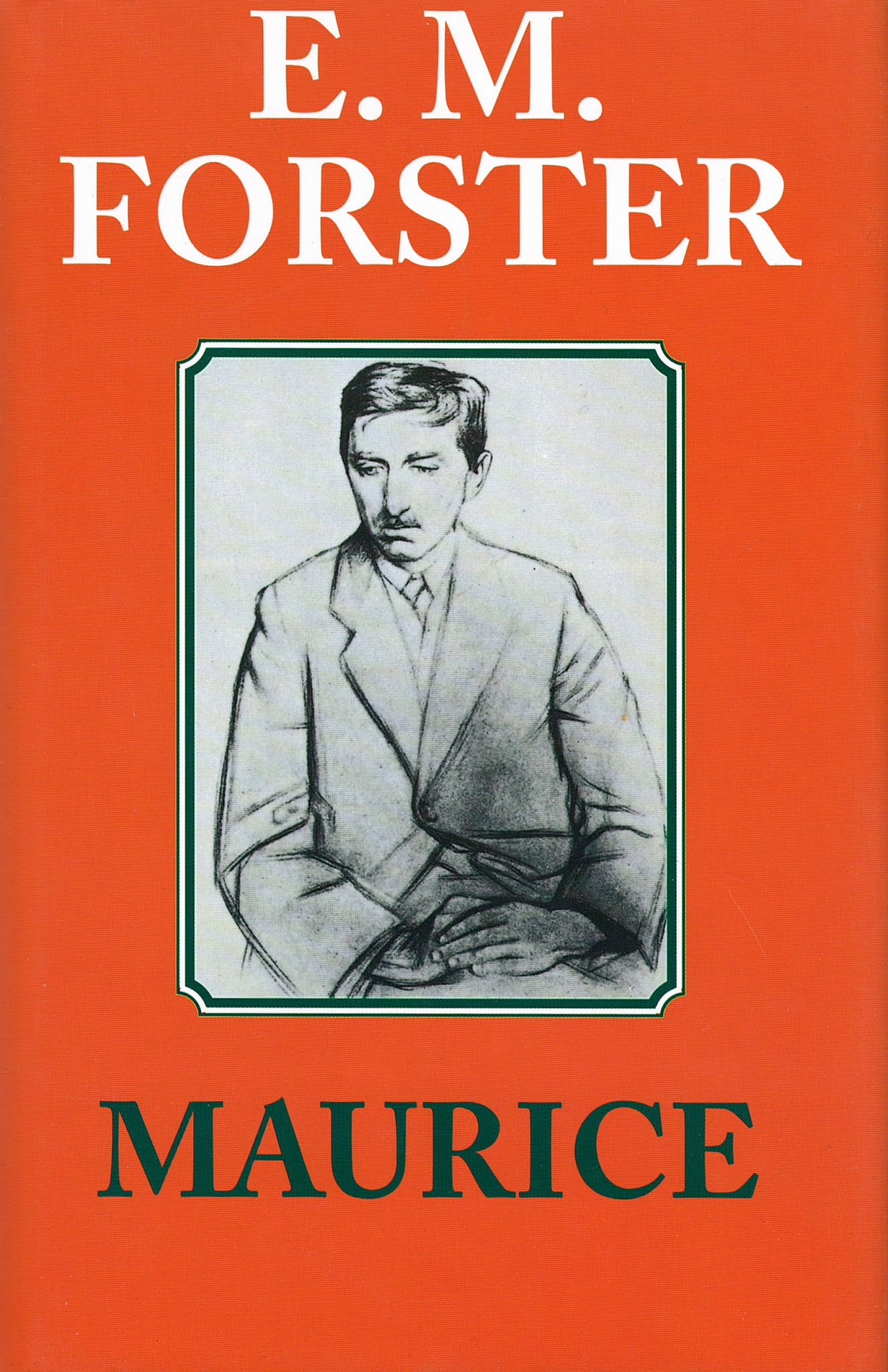
Maurice by E. M. Forster
 |
| New York : W. W. Norton, 1971 |
The novel quickly moves through the public school years which are defined by maintaining a facade to show adherence to the expected behavior. Maurice is aware of this in himself, but because he is equally aware of it in his classmates, he doesn't connect it directly to his sexuality.
While at Cambridge, Maurice befriends Clive Durham who talks to him about his shunning of religion and educates him on the Greek classics, in particular those which defend or describe male relationships—Plato's Symposium for instance. What should be an obviously increasing closeness between the two is not at all obvious to Maurice who is surprised when Clive suddenly professes his love.
If anything is known about the book's storyline, it is the relationship between Maurice and Alec Scudder, the game keeper at Penge, the Durham estate. The arc of the book, however is Maurice's journey toward being ready for that relationship. The confusion about one's feelings, the searching for a cure to one's feelings, the desire to be normal, are all too familiar for many future gay lives as well as the later novels that describe them.
The problems of class are on full display in Maurice. Early in the novel, it is quite clear that Maurice doesn't spare a thought for the lower class, and in some cases is actively unkind to those who inhabit it. It isn't simply that different characters are from different classes, it's how it is possible for them to live based on their position and that they have to always consider it when making choices in their lives. While Clive and Maurice are ostensibly from the same class, Clive's family is landed and have served in government, so have a very different role than Maurice's family which runs a financial firm. And, of course Alec, who works in service, has yet different possibilities for his life. Maurice and Alec's relationship, while already complicated by sexuality also has the added layer of class difference.
 |
| Abinger Edition : 5 London : André Deutsch, 1999 |
A key piece from the original 1914 manuscript that was dropped early by Forster is an epilogue that gives the reader a window into Maurice and Alec's life five years on. When Maurice's sister, Kitty, runs into him, he is working with Alec as a woodsman. The chapter, written primarily from Kitty's point of view, makes it clear that Maurice's choice has left himself and his family in disgrace and that he is no longer in contact with them. While he and Alec seem as committed to one another as ever, their life is not easy. After running into Kitty, they decide they must move on. It is interesting to see that Forster was realistic about what the future might hold for his characters, but by eliminating the epilogue he gave the reader a more uplifting ending with possibilities for Maurice and Alec.
One of the important things about reading classics of gay literature is a consideration of gay legacy and understanding the history of those that came before. Maurice is a beautiful example of acknowledging the long history of gay men and culture through the use of classics of Greek literature within the storyline, showing Clive and Maurice trying to understand themselves and their feelings by knowing their history. As well, the basis of the novel grew out of of the relationship that Forster saw between Edward Carpenter and his working-class partner George Merrill. It is the honoring of gay men who came before while passing the torch to the next generation.
Wednesday, April 21, 2021
Murder by Jared French
 |
| Murder (1942) Jared French (American, 1905-1988) Egg tempera on plaster coated panel 43.18 x 36.83 cm The Pennsylvania Academy of the Fine Arts |
Tuesday, April 6, 2021
The End of My Life by Vance Bourjaily
 |
| New York : Scribner's, 1947 |
Freak is the most 'normal guy' of the bunch and has joined the ambulance crew to do his part after failing to pass the medical exam for entry into the military. Benny, a Jewish communist understands the importance of the war and what it means for the future of the world, but particularly the future of the Jewish people and himself. Rod is a night club musician who doesn't stay in one place for long and doesn't seem to make lasting connections. Finally, Skinner Galt is the main character through whose eyes we see the action of the novel and feel the struggle of the characters.
Homosexuality is frankly acknowledged by all of the characters and it is understood that there are plenty of gay men in the military. Although it happens away from the action of the novel, Rod's relationship with one of the gay men in the ambulance outfit is offered in all its complexity. Rod isn't comfortable with what it means for him, particularly what it means for his mental health but at the same time he describes his feelings as love. So while the characters follow the gayness as illness paradigm of the time, they are also allowing for the relationship to be based on an emotional connection, not simply a physical or sexual one.
At its core, this novel is an exploration of what it means to be human. We like to think that we are all acting as individuals so what we do only affects ourselves. We don't like to acknowledge that our collective actions reflect on humanity as a whole. In Skinner's case, he doesn't get to separate himself from the consequences of war just because he drove an ambulance instead of firing a gun. As Benny points out toward the end of the novel, no human being is an exception to humanity.
Bibliographies & Ratings: Cory (IV); Garde (P, 117***); Mattachine Review (IV); Young (3259*)
Bibliographies & Ratings II: Gunn (American 37b); Levin (69); Slide (7)
Thursday, March 25, 2021
Rough Trade by Arthur Lett-Haines
 |
| Rough Trade (1935) Arthur Lett-Haines (English, 1894-1978) Watercolor and crayon on paper 26.7 x 21.6 cm. |
Tuesday, March 9, 2021
Sojourn Among Shadows by Murrell Edmunds
 |
| Caldwell, ID : Caxton, 1936 |
The story's young protagonist grows up the son of a preacher who is less than godly in his behavior. His mother dies and he is rescued from his abusive father by his uncle, Tom. Uncle Tom feels it important to get him away from his father but doesn't see himself as a person fit for him to be with. The boy's father often argued with his wife regarding Uncle Tom's 'degeneracy' and she would point out that it was his god that had created Uncle Tom. Hoping to protect the young man from his 'vagabond life', Uncle Tom places him with a family only to later learn that he has seen the truth of the world even in isolation.
The novel is complicated by the author's decision not to provide names for most of the characters. Some characters are eventually named, but names are offered as an aside after the bulk of the action involving them has passed. The only character that from the start is given a name is Uncle Tom, and this is maybe not completely surprising. Edmunds tackled controversial issues in his life and in his writings, having been a strong voice against Jim Crow laws. Written in the form of a fable, this novel, while not a true defense of homosexuality, does argue all humans are born as their creator intended. Using the name Uncle Tom for one of his characters and also making that character gay may be a way of showing a connection between the challenges faced by both blacks and gays.
Bibliographies & Ratings: Young (1135)
Thursday, February 18, 2021

Subscribe to:
Posts (Atom)